ODOUR CONTROL
Odour control and abatement
Odorous molecules never reach the nose
Industrial odours are caused by gaseous molecules — mainly H₂S (hydrogen sulphide), NH₃ (ammonia), mercaptans, aliphatic amines and volatile organic compounds (VOCs) — dispersed in the air at concentrations of a few ppb/ppm, often enough to cause significant olfactory impact in surrounding areas.
The high-pressure adiabatic misting system works through three complementary mechanisms: (1) physical absorption of odorous molecules into the atomised water droplets (Henry’s law); (2) chemical reaction with sprayable additives (acids, bases, oxidants, enzymes) to neutralise the molecules directly; (3) biological inoculation with probiotic microorganisms that metabolically degrade malodorous compounds, cutting the source at the root. Odour Unit (OU) reductions of 50–85%.
- OU reduction (EN 13725)−50 / −85 %
- NH₃ (ammonia)−60 / −80 %
- H₂S (hydrogen sulphide)−70 / −90 %
- Mercaptans / VOC−45 / −70 %
- Compatible additivesAcids, Enzymes, Probiotics
- Operating pressure70 – 100 bar
RESULTS BY SECTOR
Where the odour starts, where it is abated
Intensive livestock farms
Pigs, poultry, cattle
- •Bedding and manure produce a cocktail of odorous molecules with olfactory impact over perimeters exceeding 1 km
- •NH₃ (ammonia) −70%
- •H₂S −80%
- •Amines / mercaptans −55%
- •Odour units (OU) −65%
Landfills and composting
Leachate, anaerobic fermentation
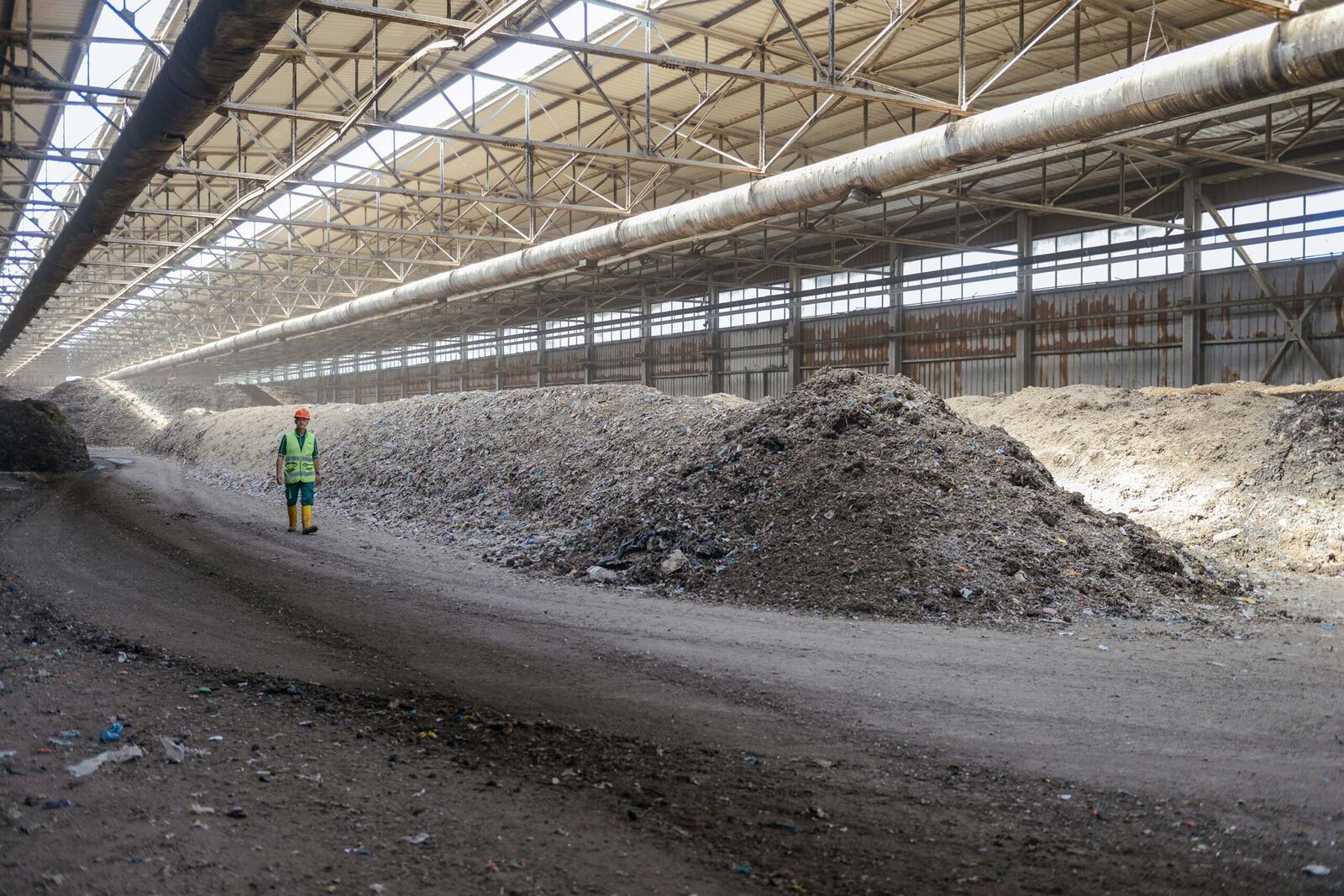
- •Bio-oxidation: processes emitting H₂S, organic acids and VOCs to be managed both inside and at the perimeter
- •H₂S / mercaptans −75%
- •Volatile fatty acids −60%
- •NH₃ −65%
- •Odour units (OU) −70%
Wastewater treatment plants
Screening, thickeners, digesters
- •Equalisation tanks: every stage produces odour emissions requiring localised or perimeter treatment
- •H₂S / sulphides −85%
- •NH₃ −70%
- •Indole / skatole −50%
- •Odour units (OU) −75%
IN DEPTH
The mechanisms of abatement
Scientific note
Note 1 — Henry’s law
p = H_cc × c_aq
Henry’s law describes the equilibrium between the concentration of a gas dissolved in water and its partial pressure in the gas phase. Molecules with a low Henry constant (H₂S: 0.1 atm·L/mol; NH₃: 5.6×10⁻⁴ atm·L/mol) are highly soluble: water droplets atomised below 10 µm present a surface area of >30,000 m² per m³ of water, absorbing odorous molecules on a massive scale.
Scientific note
Note 2 — Probiotics
Applying Bacillus to production surfaces (bedding, tanks) metabolically reduces the production of H₂S and NH₃ at source, acting on the formation mechanism rather than on airborne abatement alone.
KEY ADVANTAGES
Why choose it
>75% OU abatement
Just atomised water. No reagents, no special waste, full environmental and permitting compliance.
Perimeter application
Misting barriers along the site perimeter intercept emissions before they reach sensitive receptors (homes, schools, public areas).
Three synergistic actions
Physical absorption + chemical reaction + biological degradation: the system works on all three levels at once to maximise effectiveness.
Tailored additives
Compatible with acids, bases, oxidants, enzymes and probiotics depending on the specific odour matrix.
Measurable under EN 13725
Reductions are verifiable in Odour Units using standardised dynamic olfactometry.
Scalable installation
Perimeter rings, tank ramps or mobile lances: any site geometry can be engineered without structural works.
TYPICAL APPLICATIONS
Wastewater treatment
Composting
Livestock farms
Landfills
Digesters
Want to evaluate this solution?
We engineer the system around your site: analysis, sizing and a dedicated quote.